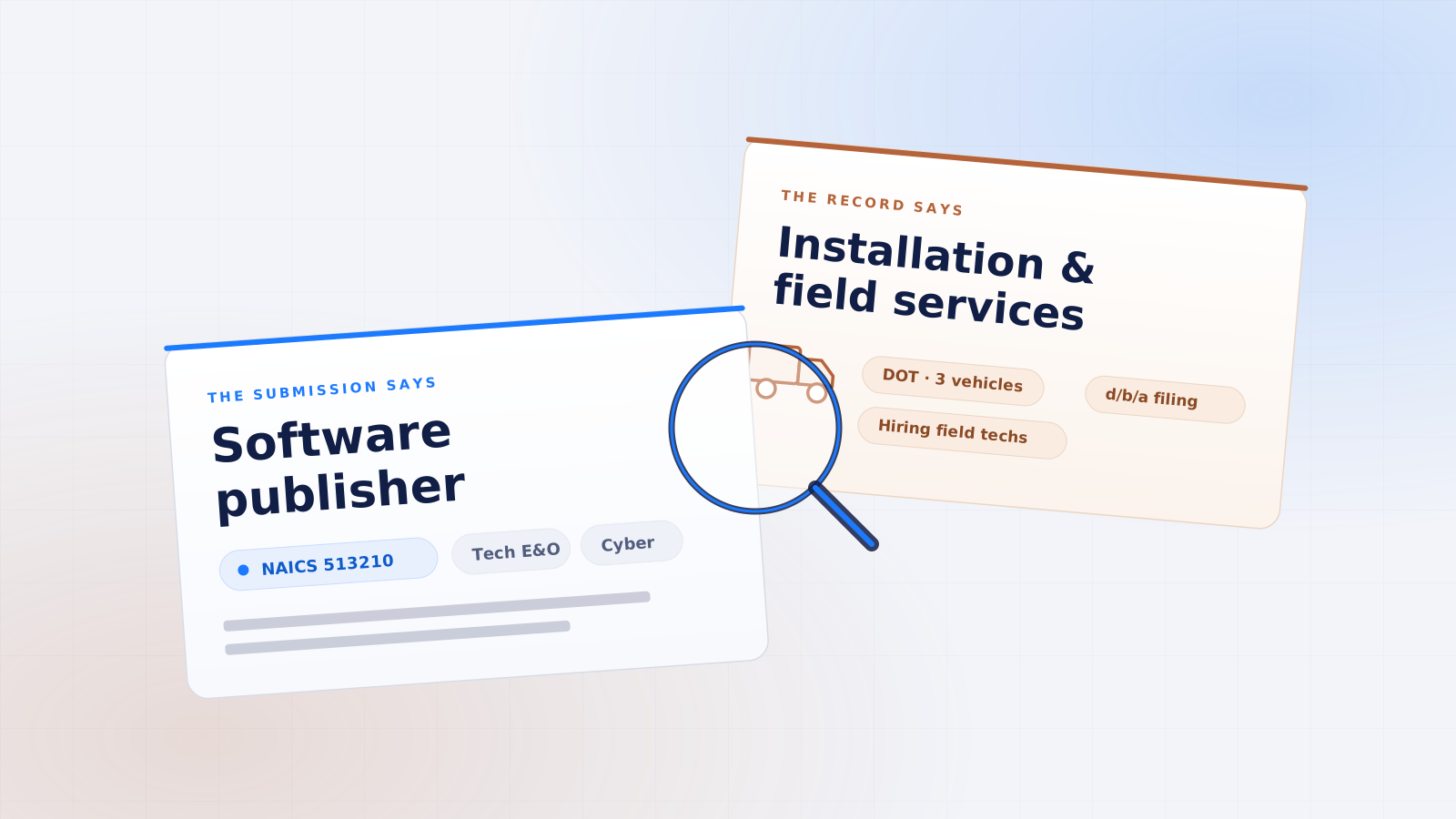
NAICS 513210. Tech E&O plus cyber, clean loss runs, easy quote. Everything in the file said software publisher — a company whose worst day is a bug and a refund. Marvin said: look again.
What the file said
A 40-person firm, eight years old, Midwest, applying for tech E&O and cyber through a specialty MGA. The application described "custom software solutions for the logistics industry." The marketing site was all the right words — platform, solutions, digital transformation. Price that as a software publisher and you've priced a company whose worst day really is a bug and a refund.
What the public record said
This is where the 45 minutes of tab-hopping usually gets skipped, because the file looks clean. The public record told a different story in four places:
- The Secretary of State filing listed a d/b/a doing "fleet telematics installation services." Installation — physical work, on vehicles, at customer sites.
- The DOT registry showed three registered commercial vehicles under the company's name. Software publishers don't usually own box trucks.
- Job postings — six months of them — were hiring field technicians and warehouse staff across two states, not developers.
- The OSHA record was clean, which sounds like good news until you notice the company had never been inspected. "No findings" and "nothing to find" look identical if you don't check which one you're holding.
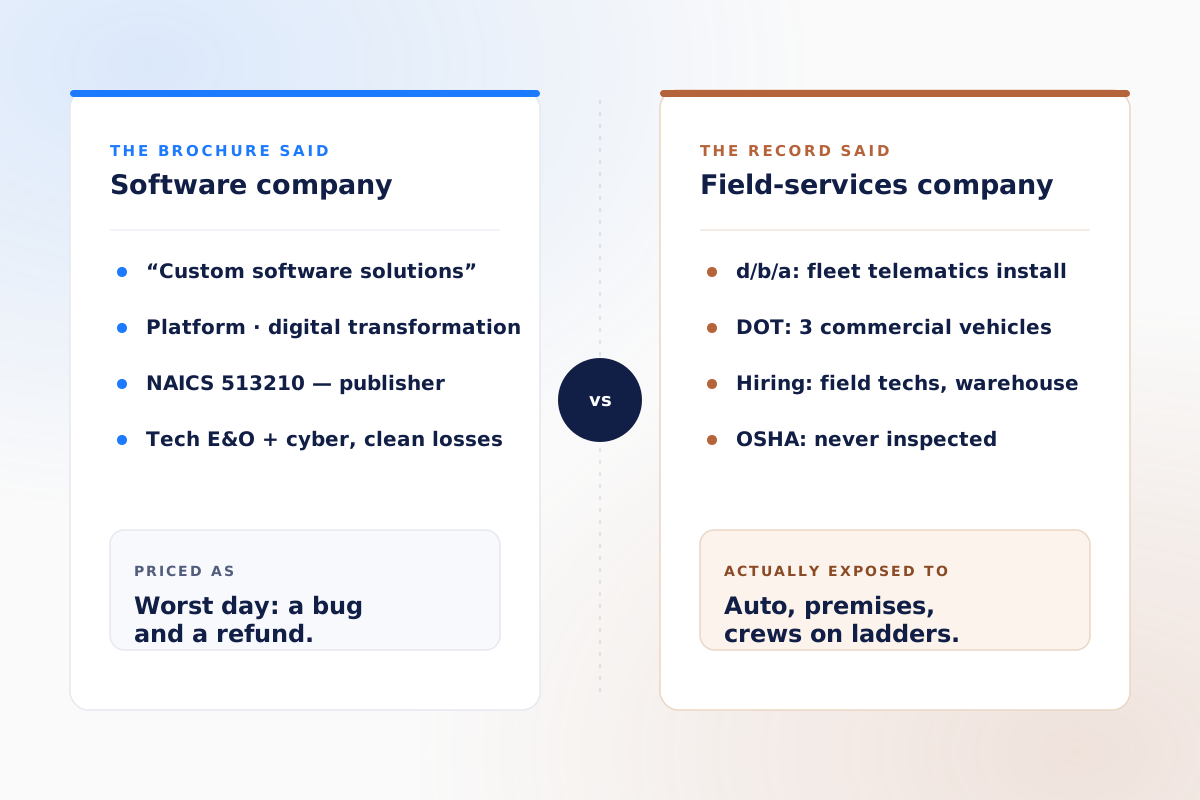
Put together, this wasn't a software company with a services arm. It was an installation and field-services company with a software brochure. Auto exposure, on-premises liability, employees on ladders at client sites — none of it priced, none of it excluded, none of it even asked about.
Why this happens constantly
Nobody lied. The company genuinely thinks of itself as a tech firm — every company does now. The broker passed along what the insured said. The website is marketing, not evidence; it's written to attract customers, not to describe exposure.
"A website is written to attract customers, not to describe exposure. It's marketing — not evidence."
Jon Ringvald · Chief GTM Officer
And the classification code, once it's in the file, gets trusted by every system downstream — rating, appetite, reinsurance reporting, the renewal that rolls over next year with the same wrong code.
What "look again" costs — and what it catches
Checking four public sources by hand takes most of an hour per submission, which is why it happens on the accounts that look risky and gets skipped on the ones that look clean. The clean-looking ones are exactly where this lives.
The fix isn't heroic effort. It's making the public-record check cost seconds instead of minutes, so it happens on every file — with the source linked on every finding, so when the reinsurer or the regulator asks how you classified this, the answer is a citation, not a recollection.
The submission tells you what the broker wants you to know. The record tells you the rest. Our job is making sure reading the record is never the step that gets skipped.
Relativity6 builds Marvin™, the research layer for commercial underwriting — classification and public-record risk research with a source on every finding. If you want to see what it finds on businesses in your own appetite, that takes about twenty minutes.